How to Spot Fake Pokémon Cards: 7 Checks Anyone Can Do
Seven simple tests to spot counterfeit Pokémon cards, from the light test to font and color checks, before you buy or trade.
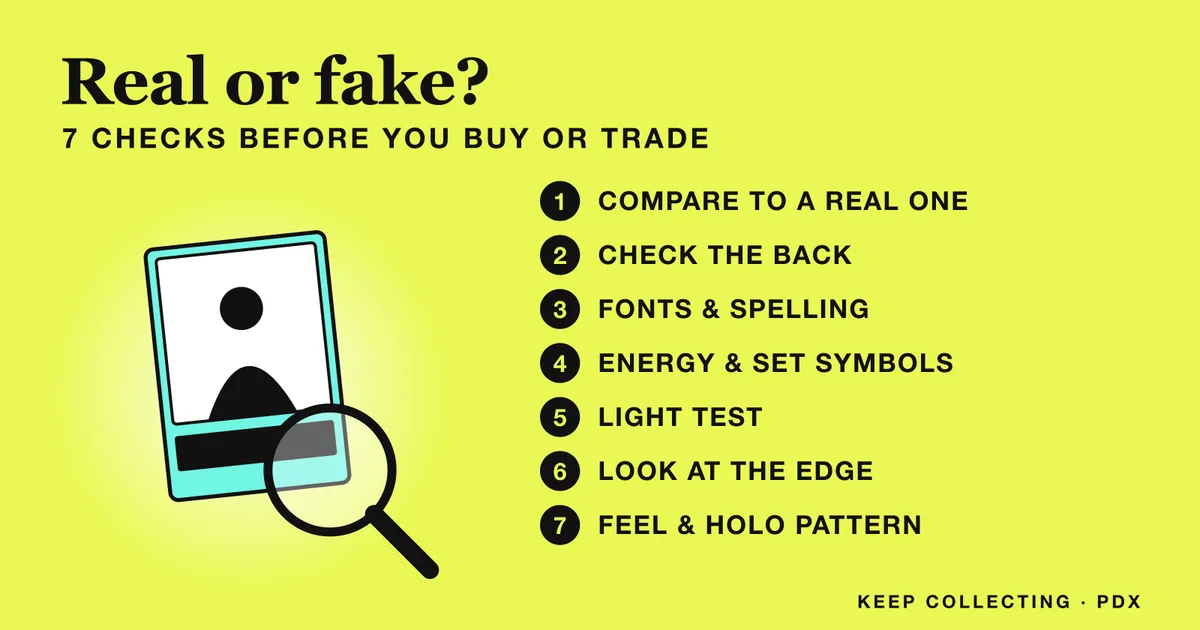
Counterfeit Pokémon cards are everywhere, from marketplace listings to “mystery packs” at flea markets. Most fakes fail at least one of these simple checks. The best tool you have is a real card from the same era to compare against.
1. Compare it to a card you know is real
Put the suspect card next to a genuine card from the same set or era. Look at the overall color, the size, and how the card feels. Fakes are often slightly off in color: washed out, too saturated, or the wrong shade of blue on the back.
2. Check the back
The card back is the easiest place to catch a fake. Real backs have a consistent, layered blue swirl with a clean Poké Ball logo. Counterfeits often have:
- A flat or purple-tinted blue
- Blurry edges on the logo
- Misaligned or cropped borders
3. Look for spelling and font mistakes
Official cards are proofread carefully. Fakes often have typos, the wrong font, the wrong accent on “Pokémon” (or none at all), or mismatched text sizes. Check the attack names, HP, and small print along the bottom.
4. Check the energy symbols and set symbol
Energy symbols on fakes are often the wrong size, badly centered, or a slightly different design. The set symbol and card number should match the set exactly. Look up the card online to compare.
5. The light test
Hold a flashlight (or your phone light) behind the card. Genuine Pokémon cards have a layer inside the card stock that blocks most light, so you’ll see a dim glow at most. Many fakes let much more light through.
This test isn’t perfect because some fakes pass it, so combine it with the other checks.
6. Look at the edge
Real Pokémon cards are made of layered card stock, and if you look closely at the edge you can often see a thin dark line running through the middle. Many counterfeits are a single layer and don’t have it.
7. Feel and holo pattern
Real cards have a particular stiffness and a smooth (not glossy-slick) finish. Fake cards often feel flimsy or too shiny. On holo cards, compare the holo pattern to a real copy: fakes often have the foil in the wrong place, a generic rainbow sheen, or holo on cards that shouldn’t have it.
Bonus: if the price seems too good, it is
A “sealed” booster box at half the market price or a bundle of 50 “rare” cards for a few dollars is the biggest red flag of all. Buy high-value cards and sealed product from reputable sellers, and check seller feedback before you buy.
What to do if you bought a fake
Contact the seller and the marketplace right away. Most platforms have buyer protection for counterfeit items. Keep the card and packaging, take clear photos, and file the claim within the platform’s window.
Planning to grade a card you’re unsure about? Grading companies authenticate every submission. See our grading company comparison.