Cooper Flagg Debut Patch Auto Sells for $8.04 Million
A Cooper Flagg one-of-one NBA Debut Patch Auto sold for $8.04 million. Harper and Knueppel patch autos also cleared seven figures.
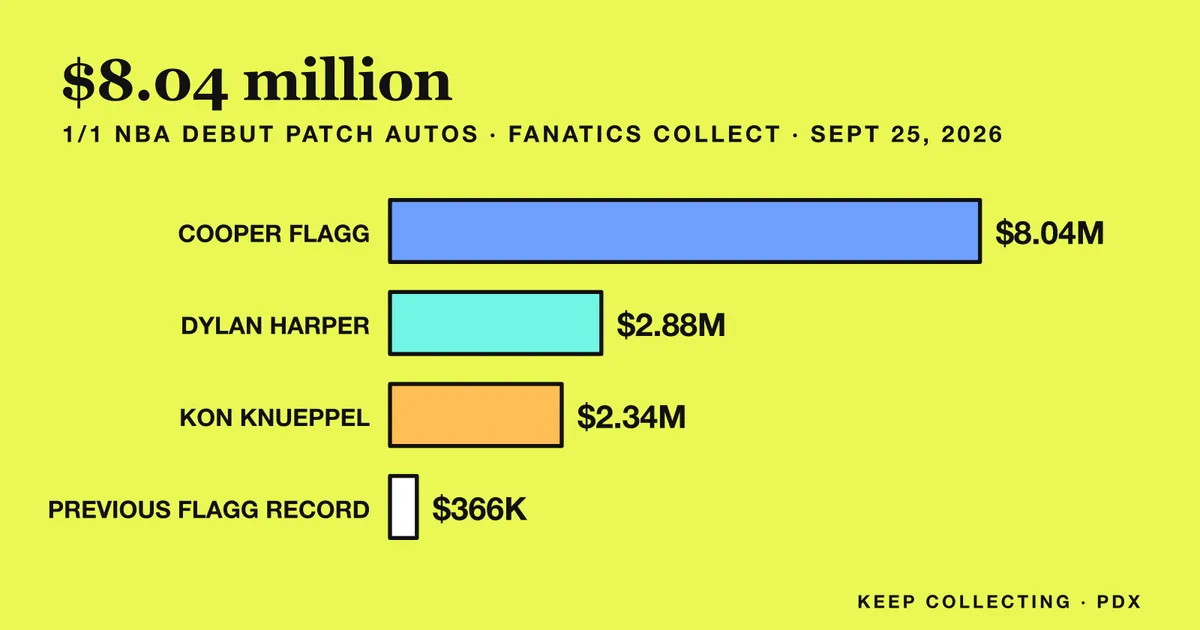
One card, one debut patch, $8.04 million. The one-of-one Cooper Flagg NBA Rookie Debut Patch Autograph sold in Fanatics Collect’s September Premier Auction, according to Topps Ripped’s new roundup and contemporary auction coverage. That’s a headline result, not a new price tag for every Flagg card in your binder.
The three auction results
| Player | One-of-one NBA debut patch auto sale, as reported |
|---|---|
| Cooper Flagg | $8,040,000 |
| Dylan Harper | $2,880,000 |
| Kon Knueppel | $2,340,000 |
Topps calls Flagg’s sale the all-time record for a Rookie Debut Patch Auto, and Fanatics Collect and CBS Sports call it the third-most expensive NBA card ever sold. It’s also more than 20 times the previous record for any Flagg card, $366,000, according to Fanatics Collect. CBS Sports separately reported all three auction results. The publisher’s article appeared September 28; the Flagg auction result itself was reported September 25. This is a recap, not a claim the sale happened tonight.
View this post on X
Why the patch matters
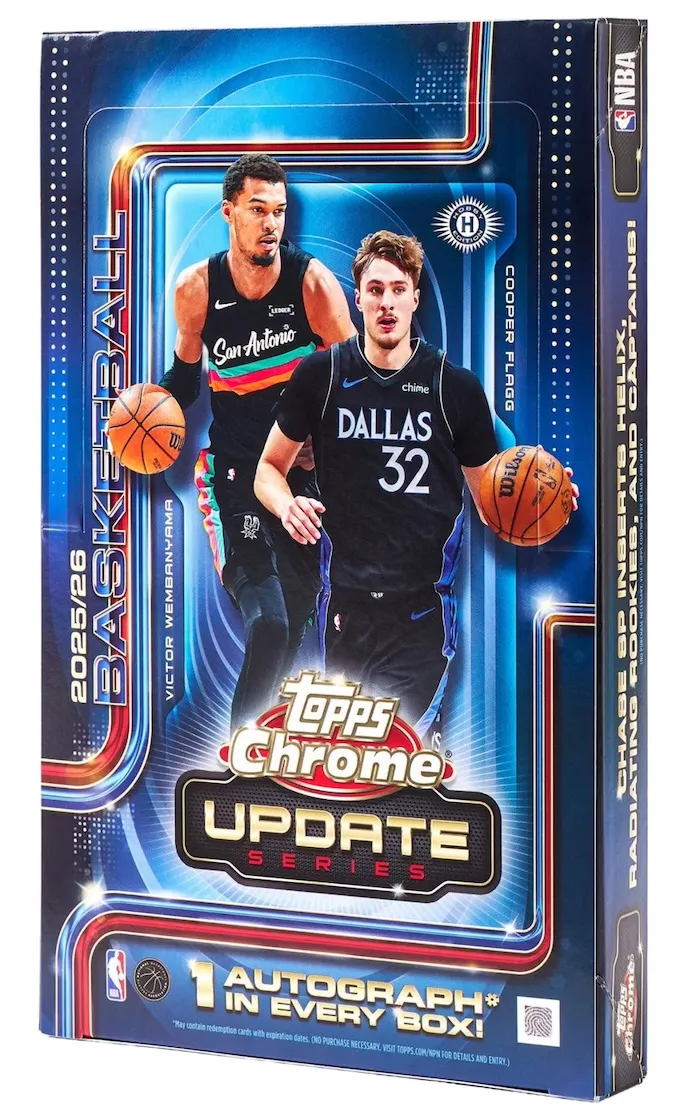
The NBA Debut Patch Auto is a one-of-one with a patch from the jersey worn in a player’s first NBA game and an autograph. Fanatics Collect’s listing describes it as a 2025-26 Topps Chrome Updates card (the same release covered in our Chrome Updates hobby box guide) with a game-used Logoman patch from his October 22, 2025 debut, graded PSA 10 with a 10 autograph. It sold as Lot 1 after 83 bids, and the $8.04 million includes the buyer’s premium. The combination is a very specific piece of player history, not simply a lower-numbered color parallel. That helps explain the attention, while the auction determines only what bidders paid for these cards at this moment.
What the sale does not tell us
It does not mean a base rookie, a different patch card, or the next hobby box has the same economics. Condition, authentication, exact card, and actual sold comparisons matter. If you’re pricing something in your own collection, start with the precise parallel and fresh completed sales, not this seven-figure outlier. I’d also avoid calling an unpulled card a retirement plan. Cardboard doesn’t offer benefits.